Pecos Valley Dairy and Agriculture Business Guide Roswell
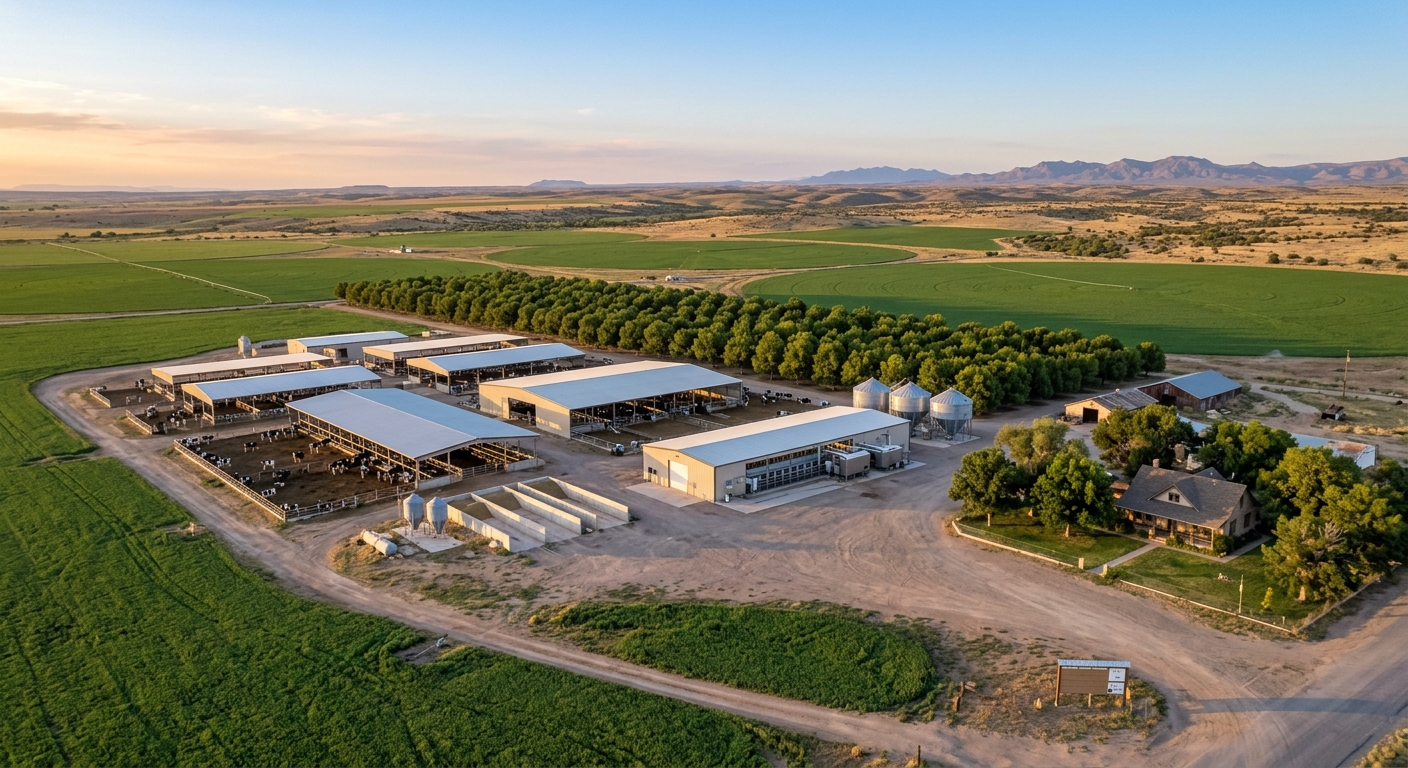
Thousand Oaks · Community Photo
Rooted in Roswell, Chaves County leads New Mexico with nearly 76,000 milk cows and more than $338 million in milk cash receipts, powering a robust dairy and agribusiness network that unlocks B2B opportunities throughout the Pecos Valley.
Roswell and the Pecos Valley Agricultural Hub
Located in the heart of the Pecos Valley, Roswell serves as the county seat of Chaves County and the focal point of a thriving agriculture ecosystem that fuels New Mexico’s food supply.
Scale of Dairy Production
Chaves County leads the state with 75,950 milk cows, generating more than $338 million in cash receipts from milk each year. This concentration of dairy livestock makes the region one of the nation’s most productive dairy belts.
Key Crop Outputs
Top‑quality alfalfa: 391,000 tons harvested annually.
Pecan harvest: 7.1 million pounds in 2015, ranking the county among the state’s largest pecan producers.
Collectively, Chaves County accounts for roughly 16 % of New Mexico’s total agricultural product, spanning beef, sheep, wool, cotton and more.
Collaborative Community
Local growers, processors and service providers are linked through organizations such as the Dairy Producers of New Mexico, headquartered in Roswell. The region’s farms benefit from shared resources, from feed‑production facilities to specialized extension services.
Economic Ripple Effects
Innovation on the ground is exemplified by Pecos Valley Production, which has created 175 jobs in Chaves County and a total of 354 positions statewide by diversifying traditional dairy operations.
Why Agribusinesses Thrive Here
Abundant water supplies and fertile soils support high‑yield farm enterprises.
Proximity to major highways enables efficient distribution of dairy and crop products.
Strong regional networks encourage investment in equipment, processing, and value‑added services.
Roswell’s Dairy Landscape in the Pecos Valley
Sector | Primary Outputs | Key Operational Requirements | Regional Supply Chain Impact |
|---|---|---|---|
Commercial Dairy Herds | Milk from 75,950 cows (over $338 million in cash receipts) | Herd management, milking equipment, feed and water supply | Supplies raw milk to local processors such as Leprino Foods and represents the largest share of state milk production |
Value‑Added Dairy Processing (Mozzarella & Ingredients) | Mozzarella cheese and other dairy ingredients produced by Leprino Foods | Processing plant, pasteurization and packaging equipment | Converts local milk into cheese products for regional and national markets, adding value to the dairy sector |
Forage & Feed Production (Alfalfa) | 391,000 tons of top‑quality alfalfa | Irrigation, harvesting and storage equipment for alfalfa | Provides feed for dairy herds and livestock throughout Chaves County and beyond |
High‑Value Tree Nut & Specialty Crops (Pecans) | 7.1 million pounds of pecans (2015) | Orchard management, irrigation and pest‑control equipment | Fuels pecan market sales, contributing to the county’s position as a top pecan‑producing region |
Dairy Farms in Roswell: DPNM’s Commercial Presence
Agriculture in New Mexico finds its dairy heart in Chaves County, which leads the state with 75,950 milk cows and generates more than $338 million in cash receipts each year.
Roswell serves as the hub for dairy‑focused agriculture in the Pecos Valley, supporting local producers and processors.
In Roswell, dairy operators looking to strengthen their market position should focus on four key actions.
Assess cold‑chain logistics to pinpoint temperature gaps and improve product quality throughout the supply line.
Partner with DPNM for advocacy and regulatory guidance, ensuring compliance and market access.
Leverage TownSites networking tools to connect with regional buyers and share best practices across the industry.
Explore financing options for equipment upgrades, enabling faster adoption of advanced cooling and processing technology.
Join the dairy community that’s shaping New Mexico’s future.
Connect with fellow producers, share best practices, and strengthen the dairy sector together.
Food Processing Powerhouse: Dairy Value‑Added in Pecos
The region’s herd of over 75,900 milk cows generates a substantial raw‑milk supply.
That volume underpins downstream processing such as cheese and mozzarella production, ensuring a steady flow of ingredients for local processors.
Operator Steps
Connect with local processors to understand supply chain capabilities.
Assess equipment needs to identify upgrades or replacements.
Explore partnership opportunities with regional manufacturers for collaborative growth.
Leverage TownSites networking tools for market outreach.
Explore Value‑Added Processing Options
Enhance your product line and increase profitability by partnering with specialized processing providers. Discover how value‑added services can unlock new market opportunities for your business.
Forage, Feed & Crop Farming: Powering Pecos Valley
Chaves County leads New Mexico with an impressive 391,000 tons of top‑quality alfalfa, a crop that fuels the region’s thriving dairy herd and supplies feed to markets beyond the state.
7.1 million pounds of pecans are also harvested here, providing a nutrient‑rich supplement for cattle and a prized product for consumers.
These two crops form the backbone of the Roswell‑centered agricultural ecosystem, linking local producers, processors, and buyers in a vibrant, interdependent network.
Learn more about Chaves County’s farming legacy
Grower Actions
To boost profitability and sustainability, growers should focus on key practices that enhance soil, diversify crops, add value, and expand market connections.
Evaluate soil health through testing and organic matter management.
Consider rotating alfalfa with corn silage to improve nutrient cycling.
Explore value‑added pecan processing opportunities for higher returns.
Leverage TownSites networking tools to connect with regional buyers.
Commodity | Production |
|---|---|
Alfalfa | 391,000 tons (state‑leading) |
Pecans | 7.1 million lb (second‑largest commodity) |
Corn silage | Common feed crop (volume not disclosed) |
Join Your Local Agricultural Network
Connect with fellow producers and expand your market reach.
Driving Agriculture Business Growth Through Farm Innovation
Modernizing the Pecos Valley’s agricultural landscape
The Pecos Valley, anchored by Chaves County, remains New Mexico’s leading agriculture region, with 75,950 milk cows generating over $338 million in cash receipts from milk in a single year and producing 391,000 tons of top‑quality alfalfa—figures reported by the county’s extension service (source). These robust base numbers have spurred investment in automated milking parlors that reduce labor hours while preserving animal welfare, allowing operators to service larger herds with precision timing.
IoT‑enabled herd monitoring
Smart sensors now track temperature, rumination, and movement for each dairy farm animal, transmitting data to cloud dashboards that alert managers to health deviations in real time. This granular visibility supports early disease detection, improves milk yield consistency, and aligns with the region’s focus on high‑productivity stewardship.
Advanced irrigation for water‑scarce environments
Given the valley’s arid climate, growers are adopting smart drip and low‑energy precision application (LEPA) pivot systems that modulate water delivery based on soil‑moisture sensors and weather forecasts. By integrating salinity‑management protocols, these technologies mitigate the buildup of salts that can impair alfalfa and pecan roots, protecting the 7.1 million pounds of pecans harvested in 2015 (source).
Crop diversification and controlled‑environment agriculture
Beyond traditional commodities, a growing number of Roswell operators are experimenting with controlled‑environment agriculture (CEA). Greenhouse complexes equipped with LED lighting and hydroponic systems enable year‑round production of high‑value vegetables and herbs, reducing reliance on irrigation‑intensive field crops. Parallel to this trend, some enterprises have pivoted portions of their land to alternative cash crops such as cannabis, capitalizing on state‑level licensing opportunities while diversifying revenue streams. The public Pecos Valley Production (PVP) initiative illustrates how a dairy‑to‑cannabis transition has created over 175 jobs locally (source).
Balancing stewardship with profitability
Roswell producers continually weigh environmental responsibility against economic goals. Integrated soil‑testing programs guide the application of lime and gypsum to counter salinity, while renewable‑energy installations on dairy barns offset carbon footprints. By leveraging data‑driven decision tools, even small business operators can achieve scale‑appropriate efficiencies that keep the valley’s farms competitive and resilient.
Entrepreneurial outlook for the Pecos Valley
The convergence of high‑tech milking, IoT herd analytics, precision irrigation, and diversified cropping positions the Pecos Valley as a model of sustainable business innovation in western agriculture. Stakeholders—from family‑run dairy farms to emerging cannabis ventures—benefit from shared infrastructure, expertise, and a community ethos that prizes both productivity and ecological stewardship.
Key Strategic Focus: Water Optimization & AgTech ROI
Leverage advanced telemetry and energy‑efficient processing to cut costs and boost water resilience for your agriculture operation.
Business & Small Business S‑Corp Finance in Chaves
Legal Structuring Options
Choosing the right entity for a farm or related business in Roswell depends on liability, tax treatment, and growth goals.
S‑Corp: Ideal for small business owners who want pass‑through taxation while paying themselves reasonable salaries. Profits and losses flow to shareholders, avoiding double tax.
LLC: Offers flexible management and limited liability. Members can elect to be taxed as a partnership or as an S‑Corp, providing adaptability as the operation scales.
General Partnership: Simpler to form and often used for family‑run dairy or crop ventures. All partners share liability and tax responsibilities directly.
Farm Accounting Best Practices
Accurate bookkeeping is essential for tracking the substantial cash flow generated by Chaves County’s agricultural sector.
Record daily cash receipts from milk sales—Chaves County recorded over $338 million in milk cash receipts last year.
Separate operating accounts for dairy production, feed purchases, and equipment leasing to improve clarity and simplify USDA program reporting.
Use seasonal cash‑flow projections to anticipate periods of high feed expense versus peak milk revenue.
Maintain documentation for the 75,950 milk cows that make Chaves County the state’s top dairy producer.
Asset Depreciation & Tax Incentives
Investing in modern equipment can be accelerated through federal and state tax provisions.
Section 179 allows immediate expensing of qualifying farm equipment, reducing taxable income in the year of purchase.
Bonus depreciation can be applied to new machinery that qualifies under the latest IRS rules, further lowering the tax burden.
New Mexico’s gross receipts tax considerations differ from sales tax; keep detailed records of equipment purchases to ensure proper allocation.
Depreciation schedules should reflect the useful life of tractors, milking parlors, and refrigeration units commonly used on large‑scale dairy farms.
Building Local B2B Relationships
Successful agribusinesses in Roswell leverage a network of regional partners.
Connect with local lenders familiar with agricultural loan structures; many have experience financing the 75,950 milk cows and associated facilities.
Establish feed‑supply contracts with nearby alfalfa producers—Chaves County produces 391,000 tons of top‑quality alfalfa each year.
Partner with logistics firms that handle transport of milk, pecans (7.1 million pounds annually), and other value‑added products to market.
Engage with the Dairy Producers of New Mexico, headquartered in Roswell, for advocacy, training, and collective marketing opportunities.
Roswell Agriculture Business FAQs for Small Business Owners
Roswell sits in the heart of the Pecos Valley, an area whose semi‑arid climate and reliable irrigation support both dairy herds and high‑value crops such as alfalfa and pecans.
Chaves County leads New Mexico with 75,950 milk cows, generating more than $338 million in cash receipts from milk each year, while also producing 391,000 tons of top‑quality alfalfa and 7.1 million pounds of pecans.
The concentration of dairy production creates a robust supply chain that feeds processors, feed manufacturers, and equipment dealers, and Leprino Foods serves as a major processing anchor for local milk.
The region’s reputation is captured in the Pecos Valley dairy and agriculture business guide Roswell, which outlines how climate, infrastructure, and market access combine to make the area a premier agribusiness destination.
Water use in the Pecos Valley is governed by the Pecos River Compact, which allocates river flow among basin states and sets baseline water availability for irrigation.
Local farms obtain groundwater permits from the County Issuing Department (CID), ensuring that extraction aligns with sustainable yield limits.
Operators adopt irrigation efficiencies such as center‑pivot and drip systems, which reduce water waste and help meet compact obligations while maintaining crop productivity.
Collectively, these practices balance the needs of dairy, alfalfa, and pecan growers with long‑term water stewardship.
The Dairy Producers of New Mexico, headquartered in Roswell, represents dairy farmers statewide and provides advocacy, training, and market information.
New Mexico State University Extension offers technical assistance, research updates, and workshops on dairy and crop management specific to the Pecos Valley.
The Roswell Chamber of Commerce maintains an agriculture directory, connecting businesses with local suppliers, service providers, and networking events.
These organizations create a collaborative network that strengthens the regional business ecosystem.
Businesses looking to reach Pecos Valley producers can join the TownSites “Town Circle” platform, a turnkey SaaS solution that supplies a branded website, member directory, and live local feed for community networking.
By listing services on the platform, suppliers gain premium homepage placement and direct search priority among Roswell agribusiness members.
Participating in local trade shows, per‑event sponsorships, and the Roswell Chamber’s networking gatherings also provides face‑to‑face opportunities to demonstrate equipment and technology solutions.
These channels enable a seamless B2B connection between service firms and the region’s dairy and agriculture operators.